
Blog
The Science Behind Medicinal Mushrooms


The historical use of fungi as a cornerstone of traditional wellness is well-documented, yet only in recent years has modern science begun to unravel the complex biochemical mechanisms that make these organisms so effective. For centuries, diverse cultures have utilized specific mushroom varieties to support everything from cognitive clarity to immune resilience. Today, a growing body of peer-reviewed research, including clinical trials from 2024 and 2025, validates these ancient practices through the lens of molecular biology. By examining the structural components of mushrooms, such as beta-glucans and triterpenoids, we can understand how they interact with human physiology to promote long-term health.
The Biochemical Foundation: Bioactive Compounds
To understand the science behind medicinal mushrooms, one must first look at their unique cellular structure. Unlike plants, which use cellulose, mushrooms are primarily composed of chitin, a tough fibrous substance that also makes up the shells of crustaceans. Locked within these chitinous cell walls are the primary “drivers” of mushroom health benefits: polysaccharides, specifically beta-D-glucans. These molecules are classified as biological response modifiers because of their incredible ability to interact with the human immune system. When we consume high-quality mushroom extracts, these beta-glucans bind to specific receptors on immune cells like macrophages and natural killer cells, essentially “training” the immune system to respond more efficiently to external threats without over-reacting.
Beyond polysaccharides, many mushroom species contain secondary metabolites known as triterpenes. These fat-soluble compounds are responsible for many of the anti-inflammatory and adaptogenic properties observed in varieties like Reishi. Triterpenes work by modulating the body’s endocrine system, helping to regulate the production of cortisol and other stress hormones. This dual-action approach—where polysaccharides support the immune system and triterpenes balance the stress response—is why mushrooms are often referred to as “nature’s multi-vitamins.” The efficacy of these compounds depends heavily on the extraction process, as the human body lacks the enzyme chitinase required to break down mushroom cell walls. This is why professional-grade extracts, which use hot water or alcohol to “unlock” these nutrients, are superior to raw mushroom powder.
Cognitive Growth and Neuroplasticity

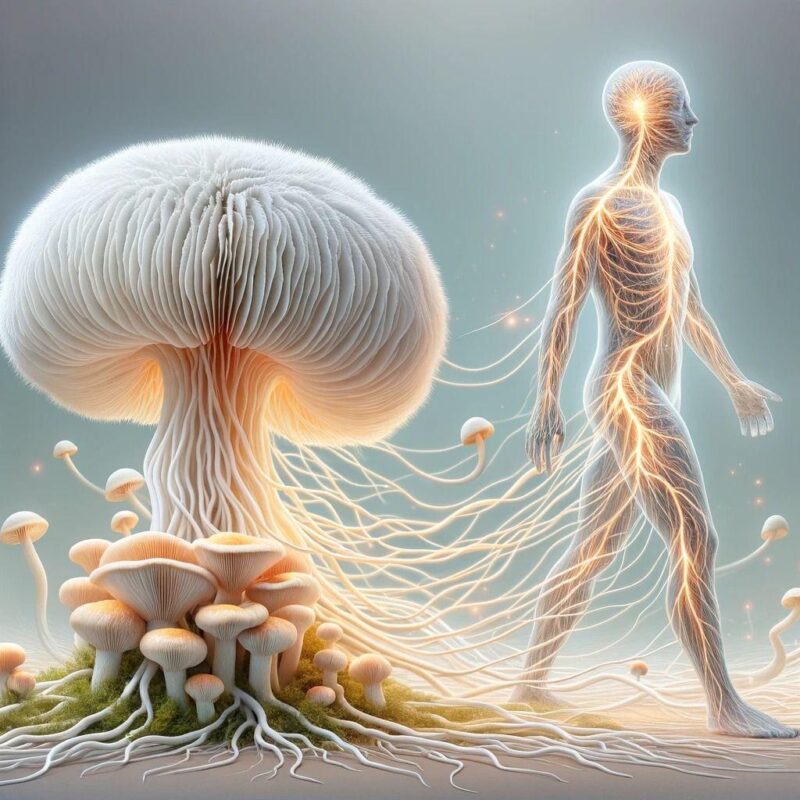
One of the most exciting frontiers in mushroom science involves neuroplasticity and brain health. Lion’s Mane (Hericium erinaceus) has become the primary subject of these studies due to its unique ability to stimulate the production of Nerve Growth Factor (NGF) and Brain-Derived Neurotrophic Factor (BDNF). These are essential proteins that act as “fertilizer” for the brain, helping neurons grow, repair, and form new connections. Recent clinical trials in 2025 have demonstrated that regular supplementation with Lion’s Mane can lead to measurable improvements in memory, focus, and verbal fluency. The science suggests that two specific groups of compounds found in the mushroom, hericenones and erinacines, are small enough to cross the blood-brain barrier, providing direct support to the central nervous system.
This neuroprotective effect is not limited to cognitive enhancement alone. By supporting the health of the myelin sheath—the protective coating around nerve fibers—medicinal mushrooms help maintain efficient communication between the brain and the rest of the body. This is particularly relevant for aging populations or individuals dealing with the cognitive effects of chronic stress. Scientific reviews have shown that by reducing neuro-inflammation, these mushrooms help clear “brain fog” and support overall mental clarity. As we continue to study these effects, the role of mushrooms in supporting mental wellness and neuro-longevity is becoming a cornerstone of modern nutritional science.
The Role of Adaptogens in Stress Management
In the fast-paced environment of 2026, the concept of “adaptogens” has moved from the fringes of wellness into mainstream science. An adaptogen is a natural substance that helps the body maintain homeostasis, or internal balance, regardless of external stressors. Reishi (Ganoderma lucidum) is perhaps the most well-known fungal adaptogen. Scientific analysis of Reishi reveals a high concentration of ganoderic acids, which have a molecular structure similar to steroid hormones. These compounds help dampen the “fight or flight” response by regulating the adrenal glands. Instead of providing a temporary energy boost followed by a crash, adaptogenic mushrooms help the body stay resilient during periods of physical or emotional strain.
This scientific mechanism extends to physical endurance and energy production as well. Cordyceps mushrooms, for example, are known for their ability to increase the production of adenosine triphosphate (ATP), which is the primary energy currency of our cells. By improving the way the body utilizes oxygen, Cordyceps supports cardiovascular health and reduces fatigue. Unlike caffeine, which stimulates the central nervous system, Cordyceps works at a cellular level to enhance natural energy reserves. This makes it an invaluable tool for athletes and professionals alike who require sustained focus and physical stamina without the jittery side effects of traditional stimulants.
Cellular Defense and Antioxidant Capacity
At the cellular level, medicinal mushrooms act as powerful defenders against oxidative stress. Every day, our cells are bombarded by free radicals—unstable molecules that can cause damage to DNA and contribute to premature aging and chronic illness. Mushrooms like Chaga (Inonotus obliquus) are incredibly rich in melanin and superoxide dismutase (SOD), which are some of the most potent antioxidants found in nature. The science behind Chaga’s effectiveness lies in its Oxygen Radical Absorbance Capacity (ORAC) score, which is significantly higher than many well-known “superfoods” like blueberries or acai. By neutralizing free radicals, these mushrooms protect the integrity of our cells and support long-term vitality.
Furthermore, Turkey Tail (Trametes versicolor) has gained significant attention in the scientific community for its role in cellular health and microbiome support. It contains two specific polysaccharides, PSK and PSP, which have been used in clinical settings across Asia for decades to support patients undergoing intensive health treatments. These compounds work by enhancing the body’s innate cellular defense mechanisms, ensuring that the immune system can identify and eliminate damaged or abnormal cells. Additionally, mushrooms act as prebiotics, providing the necessary “food” for beneficial gut bacteria. Since a large portion of the immune system resides in the gut, the science of mushroom nutrition is intrinsically linked to digestive health and a balanced microbiome.
The Future of Mushroom Science in the UK
As we look toward the future of wellness in Manchester and across the UK, the integration of medicinal mushrooms into daily life is set to increase as more data becomes available. The transition from traditional anecdotal evidence to rigorous clinical validation has made it clear that mushrooms are not just a dietary trend, but a functional necessity for modern health. The key to unlocking these benefits lies in transparency, quality sourcing, and the use of science-backed extraction methods. By choosing premium mushroom products, consumers are tapping into a sophisticated biological system that has been perfected by nature over millions of years.
In conclusion, the science behind medicinal mushrooms is a testament to the power of natural synergy. Whether it is the immune-modulating effects of beta-glucans, the neurotrophic support of Lion’s Mane, or the adaptogenic balance provided by Reishi, these organisms offer a comprehensive approach to health. As research continues to evolve, we will undoubtedly discover even more ways that fungi can support the human body. For now, the evidence is clear: incorporating these ancient allies into a modern lifestyle is one of the most scientifically sound decisions one can make for long-term wellness and vitality.
